 Leigh-Anne Harber
Table of Contents
ToggleWhether this is your very first foray into growing some food, or your one hundredth time out of the gate, tomatoes are a garden staple and one of the most ridiculously easy things you will ever put in the ground.
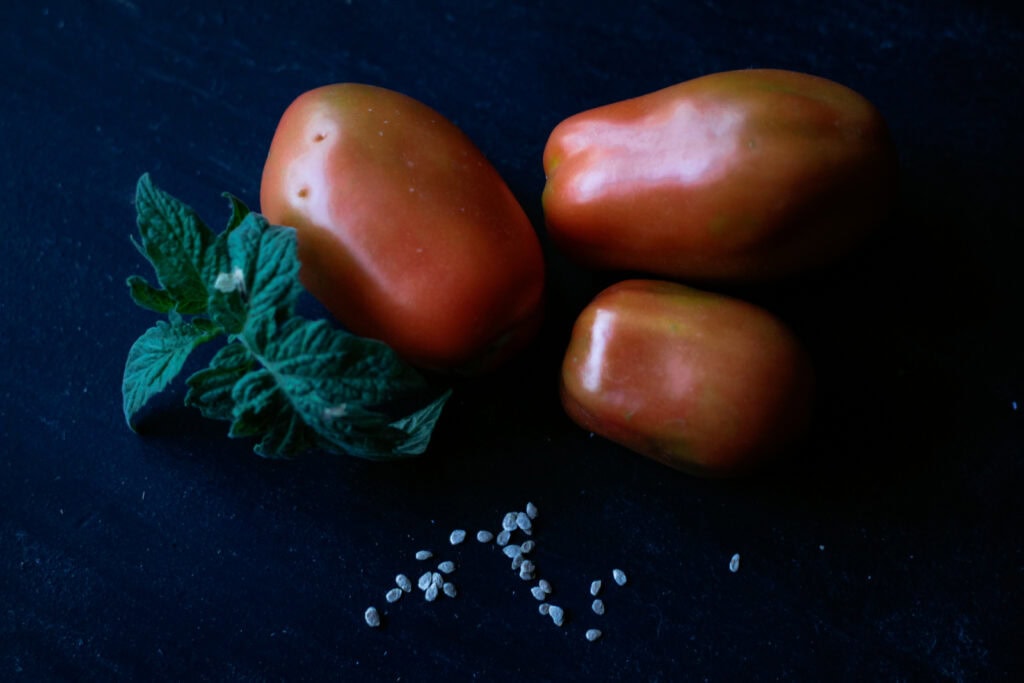
My first experience with growing tomatoes was when I was a child. I remember it like it was yesterday. I spotted a packet of Roma tomato seeds at the local Shoprite and asked if I could add it to our cart. When we got home, I decided a good place to grow them would be between a bunch of aloes so I direct planted some seeds and probably forgot about them. By the grace of nature, the plants grew and amazingly after a couple of months, we had tomatoes.
In the time since then, I have tried my hand at growing all sorts of tomatoes, and each season, when the plants have matured we enjoy handfuls of fresh tomatoes every day. And you can too with a little know-how and some curiosity.
Types of Tomatoes
The sheer variety of tomatoes in South Africa that you can get seeds for is astounding.
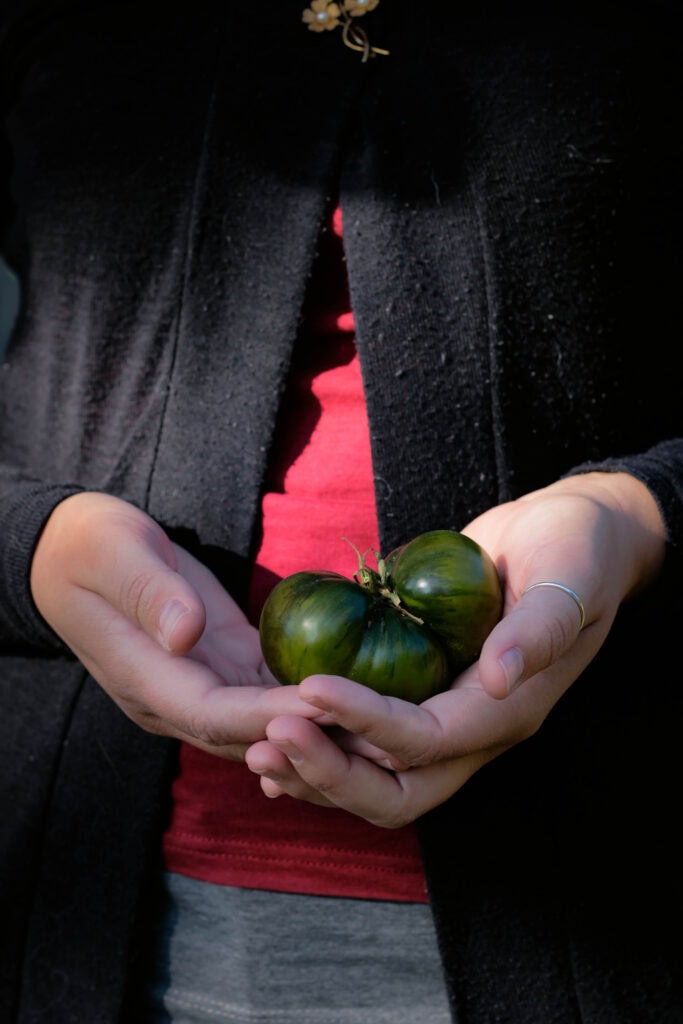
Pink, purple, black, orange, yellow, green with stripes, pear, cherry, beefsteak, elongated, the list is so long that you need only think of a tomato, and there is probably one that matches the description you have in mind.
When you are choosing the right variety for your Lowveld garden, the place to start is to decide if you want a determinate or indeterminate variety.
This is important for our climate because if you don’t have a lot of space and the summer humidity and rain kick in, you are going to quickly have an uncontrollable jungle that is going to need all of your attention!
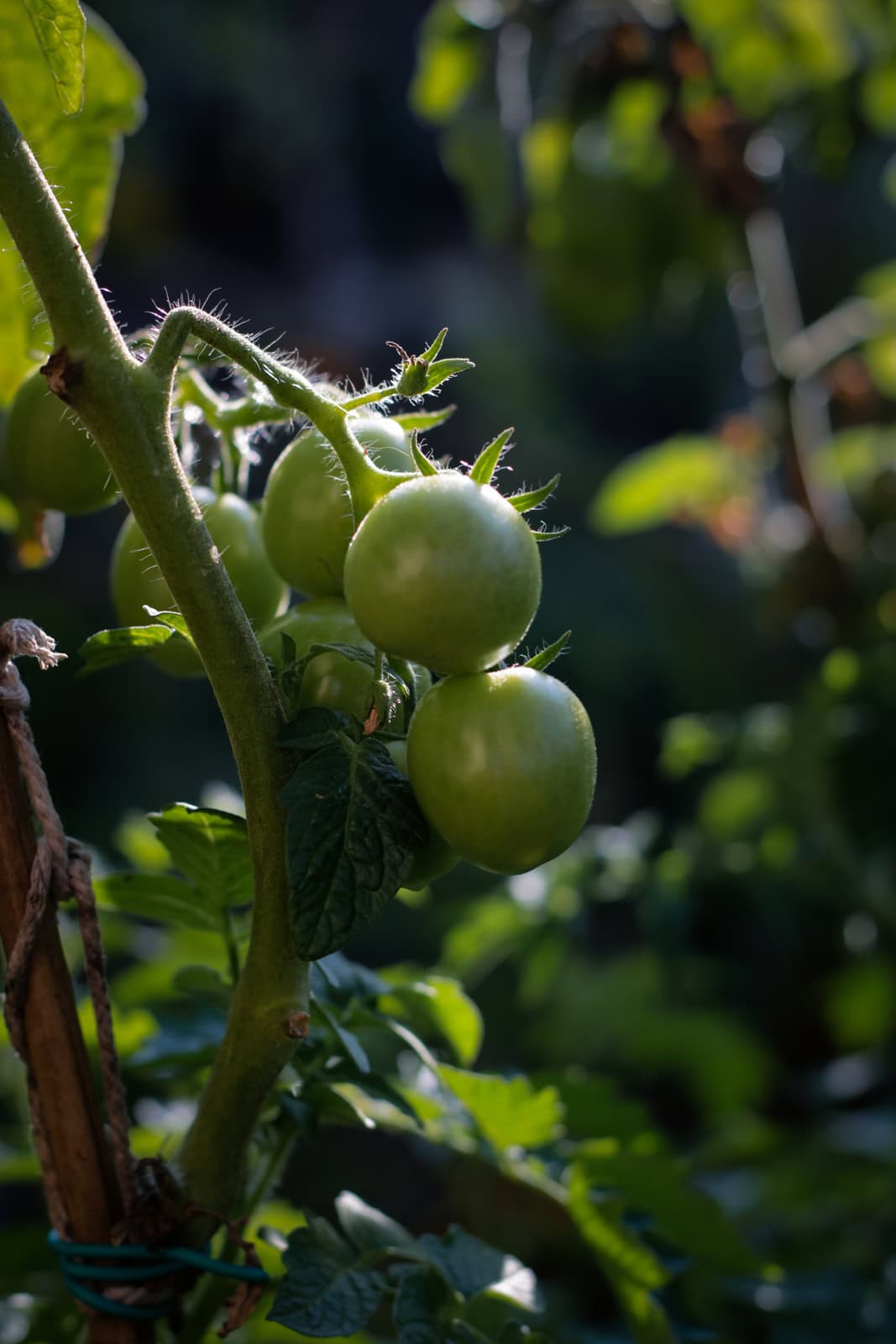
Determinate tomatoes are going to grow to a certain size while an indeterminate tomato is going to go wild and you will either need to embrace the bush or prune it (which you can do by cutting off suckers and removing the bottom leaves as the plant grows).
Aside from that, you will need to think about things like flavour and what you will be using the tomatoes for.
Unless you have a farm or a homestead, you are not going to be able to grow every type of tomato in order to find the one you just can’t live without.
To work around this, you should do your research into the various types of tomatoes and also think about growing something new every year.
Our shops are woefully lacking in tomato diversity, so when you grow your own, you are expanding your flavour horizons and you will probably become addicted to the near-endless tomato possibilities.
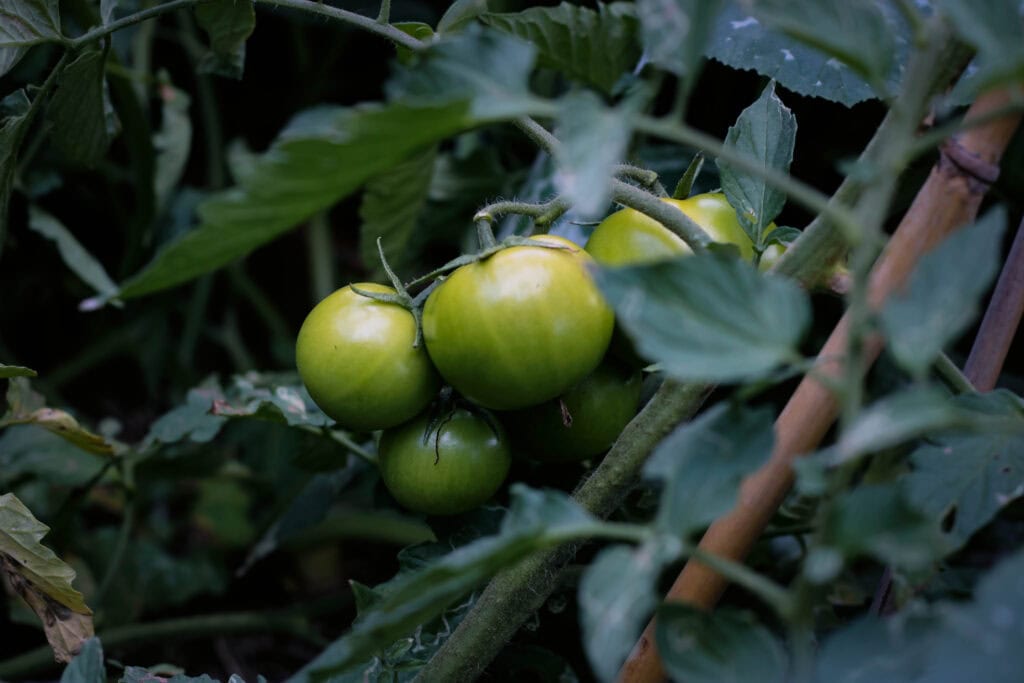
Common tomatoes include Hotstuff and Heinz, which are both fairly straight forward. Then you get Roma and San Marzino, which are good for canning, sauces and salads, because they are full-flavoured, with loads of flesh and minimal seeds. For the smaller tomatoes, you can get the Red Cherry Sweetie or Yellow Pear, both of which are incredibly tasty and also grow in greater quantities than the bigger tomatoes. All of these can quite easily grow in a smaller space and they just love our heat.
Sowing
We underestimate how lucky we are in the Lowveld.
With our climate and our lack of frost, you can grow tomatoes all year round, keeping in mind that in winter production will be a little bit slower than it is in summer.
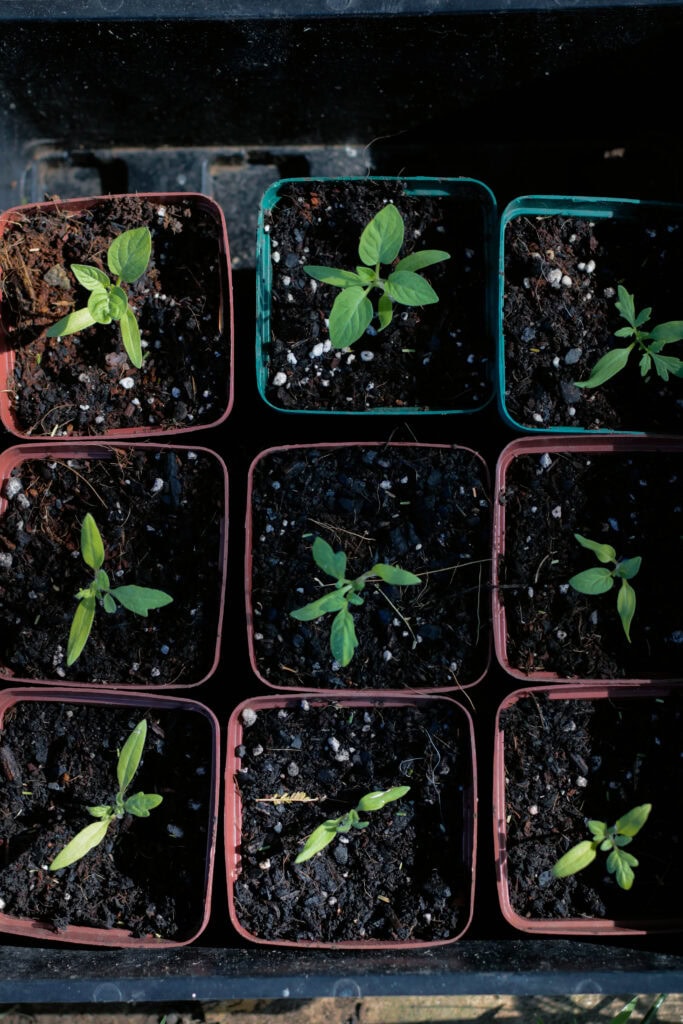
For winter tomatoes, sow your seeds in trays or small pots in February and March. You can sow again in 6 weeks, depending on how much space you have. If you sow at the end of summer, you will harvest around July, and the plants will start slowing down around September (depending on how much water you give it.)
For summer tomatoes, sow in July, August or September and keep sowing every 6 weeks in order to have a constant supply.
The summer Lowveld heat is going to kick start the growth and production so you won’t have to buy tomatoes at all during this time of year.
One tomato plant is not enough, even if you are the only one eating from it.
For a household of 3, think about planting at least 10 tomato plants. At the height of maturity, these 10 plants should give you a handful of tomatoes every day.
During the dry heatwaves that we get at the start of spring, make sure to keep the plants well watered, or they will dry up and die…and you will be sad.
Growing
Planting and spacing are a very big deal when growing tomatoes in South Africa. And your site planning should begin the moment your seedlings sprout.
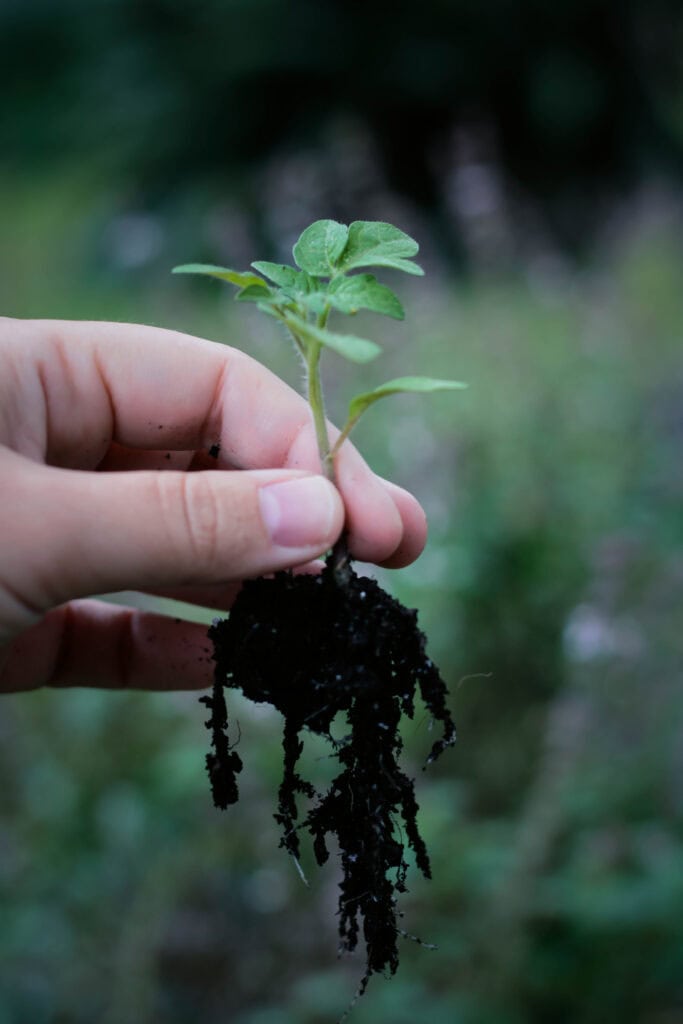
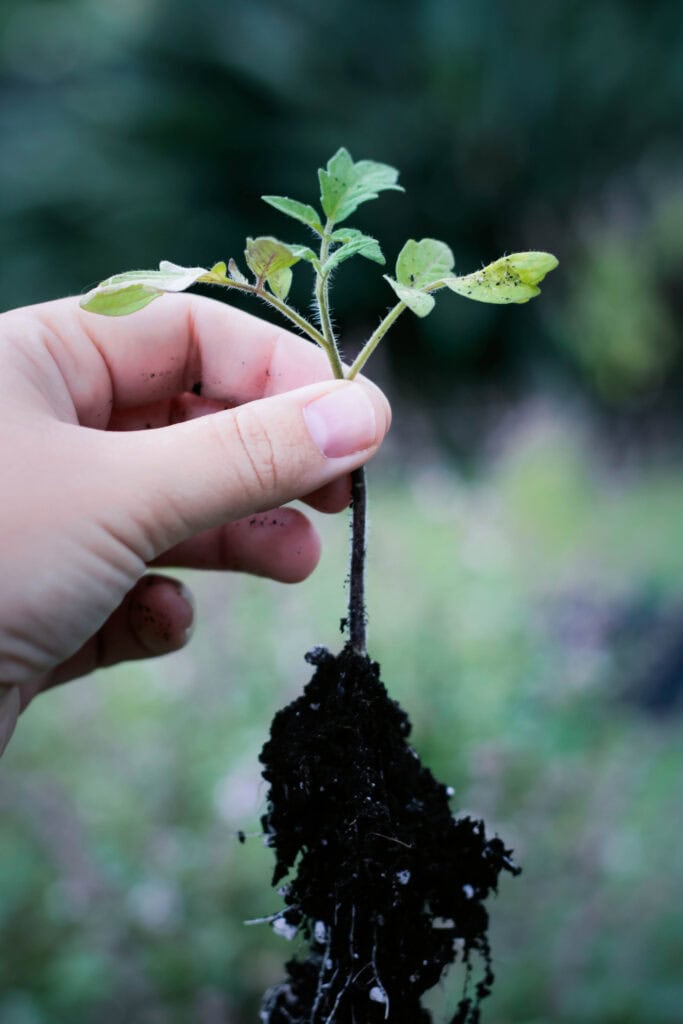
When your tomato baby has at least 2 sets of leaves, you can start thinking about upping its accommodation.
I like to remove the plant from the seed tray and move it to what I call a halfway box, where I will let it grow a couple more sets of leaves before moving it to the garden.
In the garden, you should always give your tomato some support.
Some will say that this is not necessary, but with our summer winds and storms, they need to be held up.
In fact, even in winter, they grow big enough to be held up; you don’t want your plant lying on the ground, that’s just asking for fungus.
Initially, the tomato should be planted with some compost mixed into the hole you’ve made.
You want to space your tomatoes at least 20 to 30 cm apart. They will bush out, and when tomato leaves touch each other, they get disease. However you are planting, make sure the tomatoes have enough air flow between them.
You can place the plant’s roots directly in the hole, or you can lay it sideways. Tomatoes are able to grow roots up their stems, and this can help the plant to be more stable in the ground.
When your babies are planted, you can mulch around them to help keep moisture in, but that’s not exactly necessary; it is more of a thing of convenience, as you will have less to worry about on hot days.
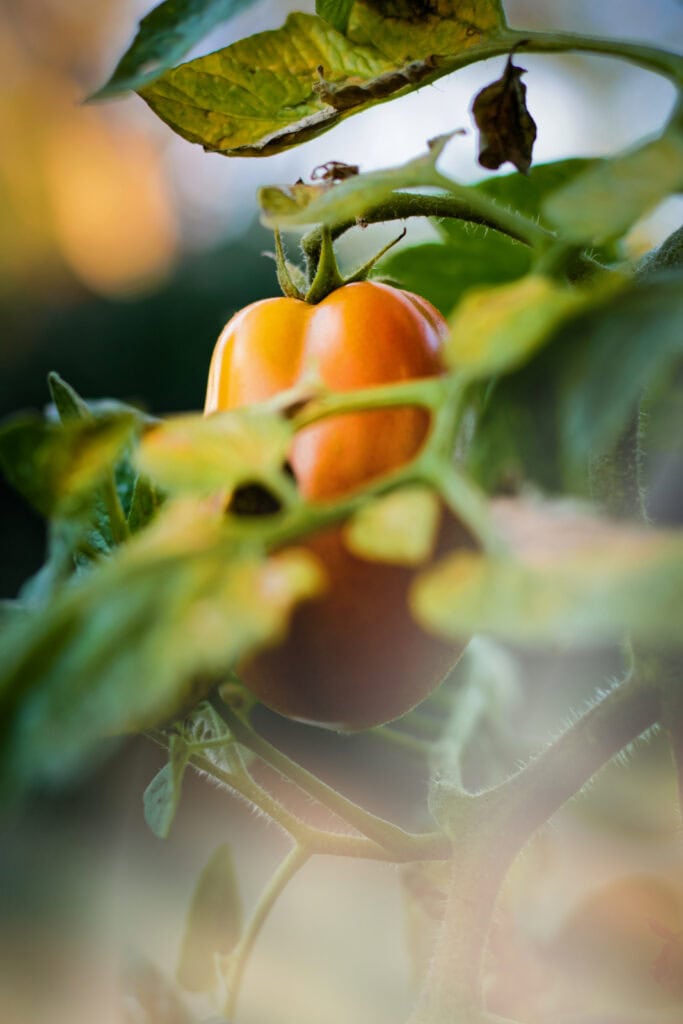
Tomatoes need a deep watering about twice a week, but at the same time, they can also benefit from a little bit of stress, so if you happen to let the plant dry out during a dry spell, and especially when the plant has fruits, you’ll get extra sweet tomatoes.
Another thing about growing a tomato is that new plants can be grown from the suckers, which is the stem that grows between other stems or the leaves and stems.
When the plant starts to take off, and especially when you start seeing those little yellow flowers, you’ll want to give the plant some extra nutrients. I use plant food in the liquid form or in the powder, and I try to remember to give it to the plant every 2 weeks but more often than not, I forget and the plant doesn’t die, so no stress if you skip this part.
The reason why extra nutrients are given to the growing tomato is because tomatoes are heavy feeders and can benefit from a little help.
You can also think about planting beans close to your tomatoes. Beans feed nitrogen into the soil and that really gives any plant a great boost.
On a side note, and this is purely a matter of preference, as I have not seen much difference, you can remove the first yellow flowers.
Tomatoes put on flowers often long before the plant can carry fruit, and these flowers tell the plant to take up more nutrients to support the coming fruits.
Removing these first flowers can apparently help the plant put its energy into growing bigger before it sets fruit.

Pests and Dieseases
In my experience, Lowveld tomatoes are fialry hardy.
It is advisable to grow marigolds (I like Boy ‘o Boy Marigolds, those small ones that are easy to plant beneath the tomato bush) close to your tomatoes. They keep most of the common pests away and also help with tomato flavour.
The biggest issue I have faced, and it was a winter problem, is rust (blight).
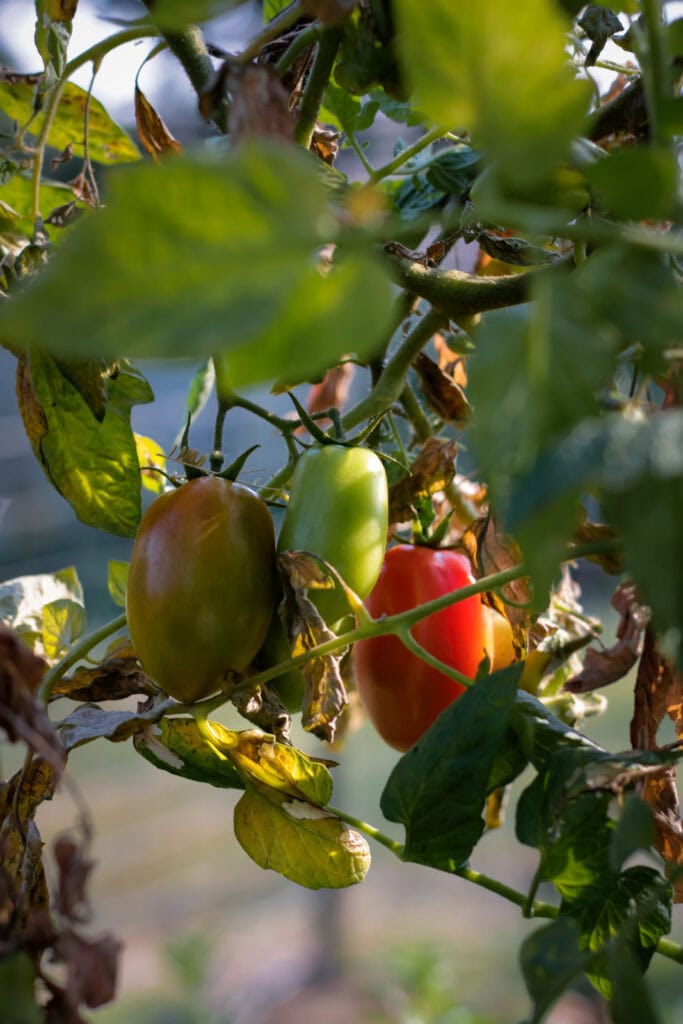
It comes on so fast, and before you realise what has happened, the plant’s leaves have turned brown and dried up.
The stems also end up with black spots, which is a sure sign of the impending death of the plant.
The best way to beat the blight is to spray with a fungicide every couple of weeks. In the summer, even though we get lots of rain, rust tends to stay away because the plants dry off fast.
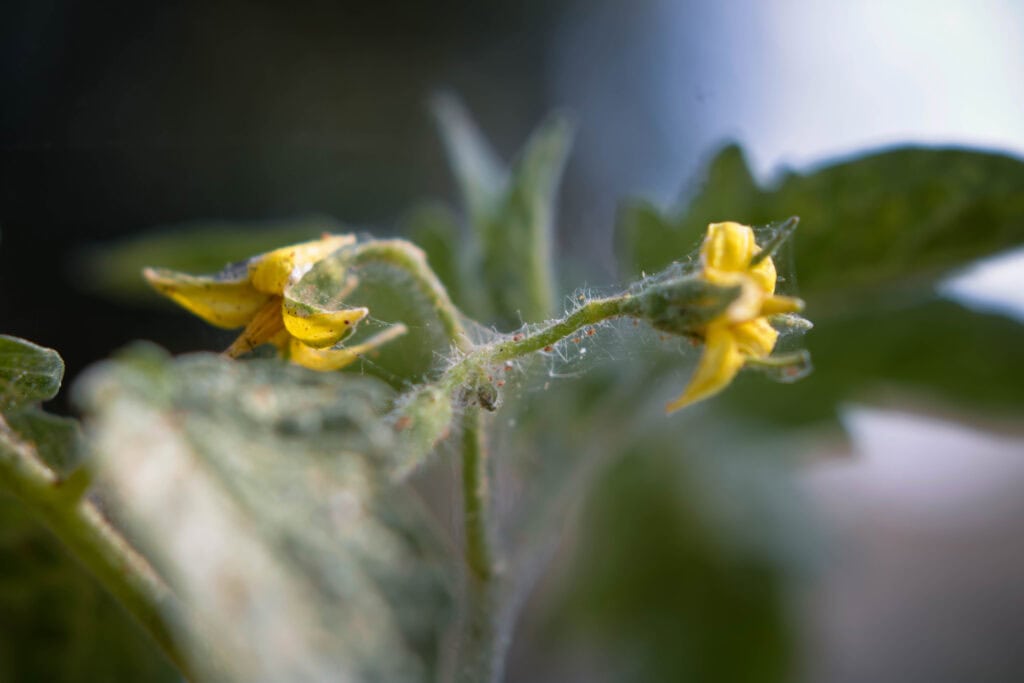
Another problem I have dealt with is the invasion of red spider mites.
They create fine webs on leaves and stems, and you’ll also notice the leaves start looking speckled and brown. I have found they can be an issue during hot dry spells, but they are easily removed with a Kumulus spray.
Tomatoes are also susceptible to blossom end rot, the result of up-and-down watering. When you have a deluge of summer rains for weeks on end, when the plant has fruit, and then it suddenly stops, it is not uncommon for the bottom of the fruit to turn black and eventually rot. This is because the plant has been forced to grow quickly.
Another cause for blossom end rot is calcium deficiency in the soil. This is why you should save your egg shells, break them up, and add them to the soil.
What to do with your harvest
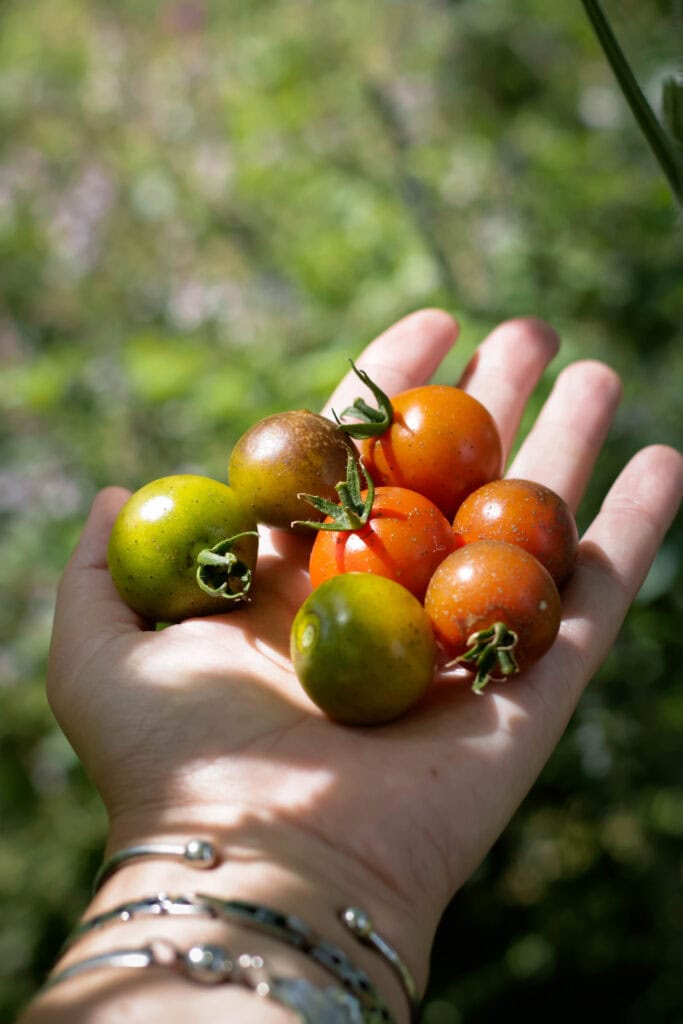
Tomatoes are famously versatile. Really, what can’t you do with a tomato?
If you are looking for some taste inspiration, here’s what I like to do:
- Slice your tomato up; fry it in butter, salt and pepper, and garlic and herbs until soft. Serve it hot on a slice of toast.
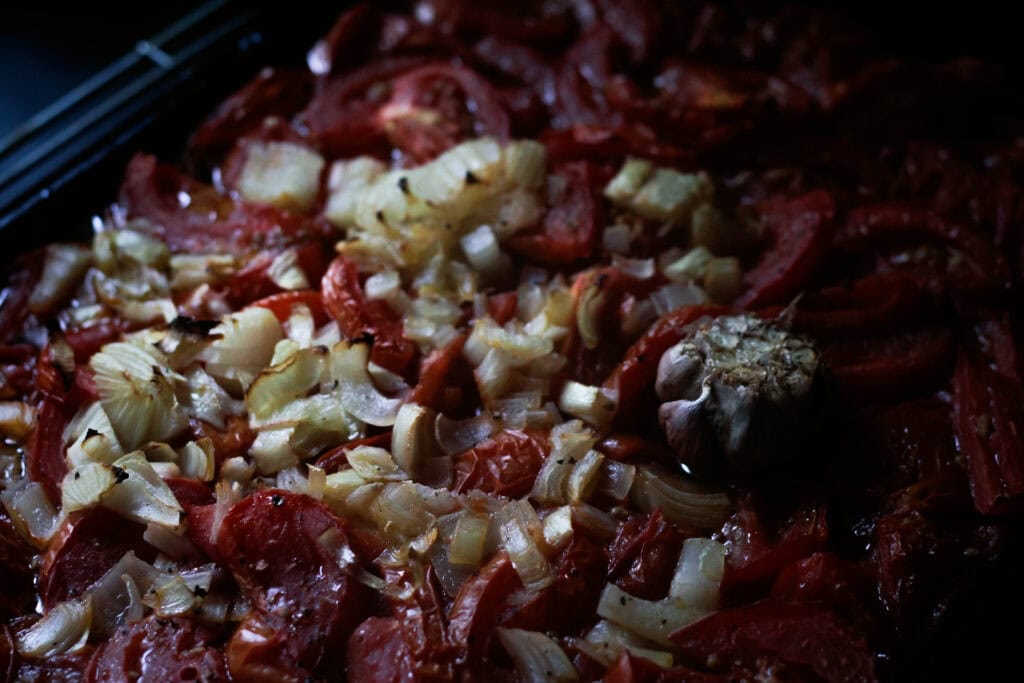
- Roast the tomatoes with onions, peppers, garlic, and seasoning, and then can them (making sure that you practice safe canning principles). This combination is a delicious addition to stews and it goes great on a pizza, or just as a sauce.
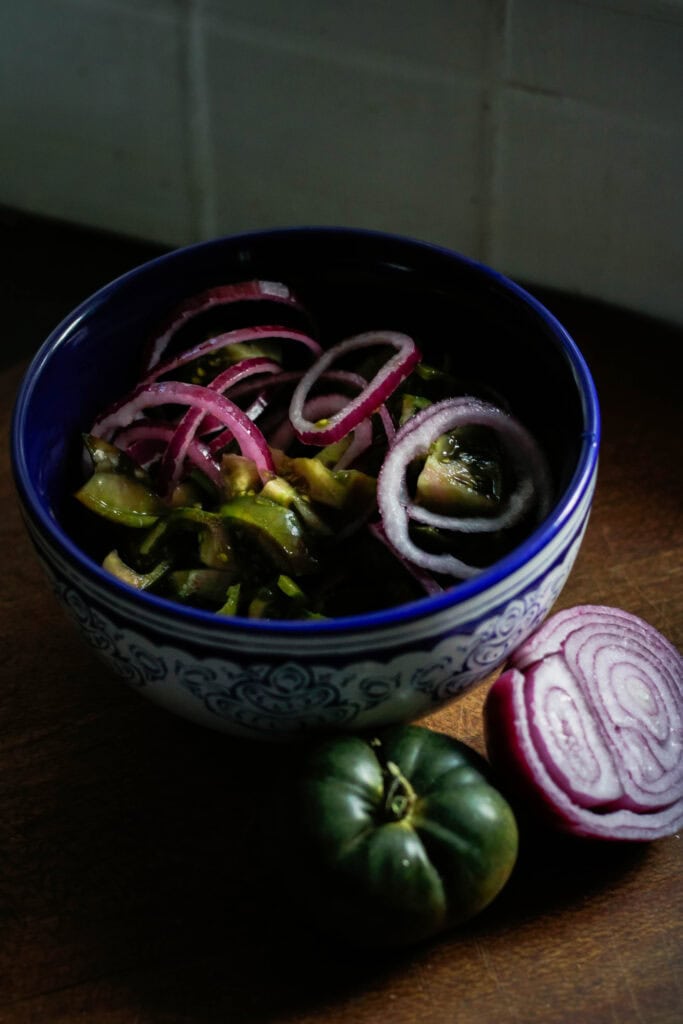
- Chop up and add to a green salad, or add it to some peppers and onions and turn it into a salsa.
- Make tomato soup! There are loads of easy recipes on the web and fresh tomatoes are far tastier than shop packed tomato soup.
- Slice the tomato and add it to your cheese sandwich. Place the sandwich on a hot pan or in a press and grill it to perfection.
A tomato will never lose its top spot on every vegetable grower’s list. And once you get the hang of growing these gems and learning how to save some seed, I promise, you will never buy a tomato again!
Growing Tomatoes in South Africa Q&A
- What is the best time to plant tomatoes in South Africa?
Tomatoes thrive when planted in the spring and early summer months (August to December). In frost-free areas, they can be planted year-round. - How long does it take for tomatoes to grow in South Africa?
Tomatoes typically take 90–120 days from planting to harvest, depending on the variety and growing conditions. - What are the best tomato varieties for South Africa?
Popular varieties include Roma, Cherry, Moneymaker, and Oxheart, which grow well in South Africa’s climates. You should choose disease-resistant varieties for better results. There are also plenty of heirloom varieties available, that you can acclimatise to your region after a season or two of growing. - Can tomatoes be grown in containers?
Yes, tomatoes can be grown in containers with a depth of at least 30 cm. Use nutrient-rich soil and a sturdy support structure for the plant. To grow in containers, look for determinate varieties, such as the Window Box Tomato. - How much water do tomatoes need?
Tomatoes need consistent watering, about 20–30 mm per week. You should water deeply at the base of the plant to avoid fungal diseases on the leaves. - What type of soil is ideal for tomatoes?
Tomatoes grow best in well-drained, loamy soil enriched with compost. - What fertilizers should I use for tomatoes?
A balanced fertilizer is ideal, but only if you have soil that is perfect. You should look for signs of what your plant needs before you fertilize. I encourage the use of organic fertilizers instead of commercial ones, as they are best for the plant and the soil. For optimal growth, you can give your tomatoes some plant food twice a month. - How can I prevent tomato plants from getting pests?
To prevent pests like aphids, whiteflies, and cutworms:
- Use companion planting (e.g., basil or marigold).
- Regularly inspect leaves for signs of infestation.
- Use natural pesticides like neem oil or garlic spray.
- What diseases commonly affect tomatoes in South Africa?
Common diseases include early blight, late blight, and powdery mildew. You can prevent these by ensuring proper air circulation, watering at the base, and avoiding overcrowding. - Do tomato plants need to be pruned?
Pruning helps improve airflow and encourages fruit development. Usually you would remove the lower leaves of the plant. You can also remove suckers (small shoots) growing between the main stem and branches although there is a debate about whether or not this results in better yields. Don’t throw the suckers away, place them in water and they will grow roots, giving you an instant (bigger) tomato seedling. - How can I support my tomato plants?
Use stakes, cages, or trellises to support tomato plants as they grow. This prevents the fruits from touching the ground, reducing the risk of rot. - How do I know when tomatoes are ready to harvest?
Tomatoes are ready to harvest when they are firm, fully coloured, and slightly soft to the touch. Pick them gently to avoid bruising. - Can I grow tomatoes organically in South Africa?
Yes, tomatoes can be grown organically using compost as fertilizer, crop rotation to prevent diseases, and organic pest control methods like neem oil. - How do I deal with yellowing leaves on tomato plants?
Yellow leaves may indicate:
- Overwatering or under watering.
- A nutrient deficiency, especially nitrogen or magnesium.
- Fungal infections like blight.
First address the underlying cause and then remove affected leaves.
- How far apart should tomato plants be spaced?
Tomato plants should be spaced about 30–60 cm apart in rows that are at least 90 cm apart to allow for adequate air circulation. - Can tomatoes be grown indoors in South Africa?
Yes, tomatoes can be grown indoors if they have enough sunlight (6–8 hours daily) or under grow lights. You should choose compact or dwarf varieties for best results. - Why are my tomato flowers not turning into fruit?
This could be due to poor pollination, extreme temperatures, or insufficient nutrients. You can try to encourage pollination by gently shaking the plant or attracting pollinators like bees. - How can I improve the flavour of my tomatoes?
For sweeter and more flavourful tomatoes:
- Reduce watering slightly as the fruits ripen.
- Use well-composted soil rich in organic matter.
- Ensure the plants get plenty of sunlight.
- Harvest in the afternoon. The warmth will bring out the sweetness.
- How do I store harvested tomatoes?
Store ripe tomatoes at room temperature, away from direct sunlight. As much as possible, avoid refrigeration unless the tomatoes are overripe, as cold temperatures can affect flavour. - Can I save seeds from my tomatoes for next season?
Yes, you can save seeds from ripe, healthy tomatoes. To do this, scoop out the seeds, let them dry completely on a piece of paper towel, and store them in a cool, dry place. You also scoop the seeds into a jar of water, letting the seeds separate from the jelly and then place the seeds on a paper towel to dry out.





Thanks very much for your patience to motivate us,,I started sowing tomato tree/Camarillo for the first time I will see my harvest time
I am so sorry for my late response. How was your harvest?
Hello, thank you for your post – very insightful.
Which nursery would you recommend to get the best products for tomato growing in Cape Town, South Africa?
Hi there,
I am in the Lowveld so I am unfortunately not familiar with Cape Town’s nurseries. I would suggest giving the Living Seeds and Glen Seeds online shops a look. They have a great selection of seeds and gardening products.
Hi, you can also try Plantforum online shop, they sell seedlings and I bought for the first time this winter and believe me the packaging is wonderful, they were 100% all the way from inland to Hermanus. The prices is great.. R2.00 to R2.50 per seedling or a bunch of onions… Very impressed. I do start from seeds but you know sometimes time just gets ahead of you🙂
I will definitely look them up, those prices are amazing!