
 Leigh-Anne Harber
Table of Contents
ToggleAutumn is carrot seeding season. While in the Lowveld, carrots can easily be grown all year round, from autumn to spring they are just easier to keep an eye on and they are not as likely to disappear under other plants. They also taste a whole lot better! That’s the thing about the winter months, the cold can actually make veggies (certain veggies) taste nicer.
Right from the get go, I have to tell you, I was intimidated by the carrot. The seeds are so small that you pretty much need to forget everything you’ve learned about seed starting and just accept that some carrots will grow on top of others.
Whenever you are gardening, you have to remind yourself to just let perfection go. Not only are you going to have a couple of hurdles that will be that reminder that you have far less control in life than you think, but Mother Nature is also going to show you, at one time or another, that your plans and intentions don’t really matter to her.
So when you find yourself accidently throwing more than one seed into the single hole, or when you see the seedlings are coming up in bunches that are way too close to each other, just make peace with the messy parts of being a gardener and growing your own food.
Aside from that, carrots are surprisingly fuss free and in my experience they have a fantastic germination rate. I was not going to try out planting carrot seeds, because it just wasn’t something we eat a lot, but I was gifted a packet of seed, so I prepared some ground and planted some. The result was enough carrots to eat and to preserve. Needless to say, it is now a staple in my garden and I will always get excited to spot those tiny green hairs popping up a week or so after planting.

Types of Carrots
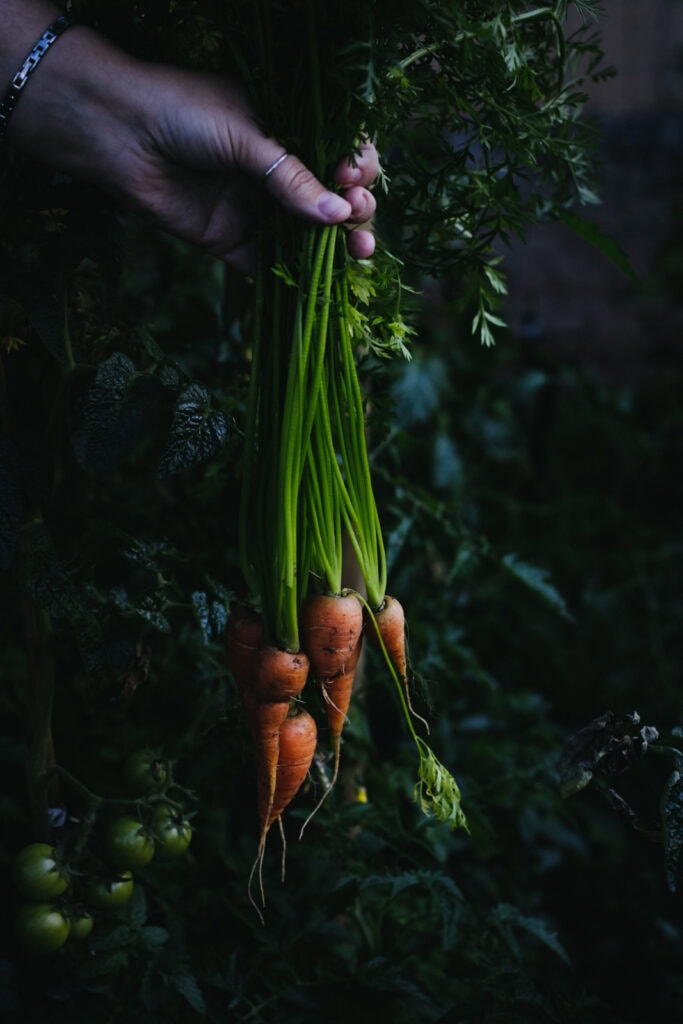
The very first and only carrot variety I have grown is the Chantenay Karoo Carrot. It is what I’d call a conventional carrot; it’s orange, it tastes deliciously fresh and has the most enticing sweetness and softness when cooked. It also stores well, and preserves incredibly well, something that is high up on my personal list of vegetable priorities.
The carrot seed packet I was gifted was from Mayford Seeds and it has more seeds than you will know what to do with (if you are a small scale gardener). I would estimate that there are more than 1000 seeds in a packet of Mayford Chantenay Seeds so you will get a couple of good harvests for a single, very affordable packet.
Chantenay Karoo Carrots grow perfectly in our autumn and winter Lowveld conditions and they also grow wonderfully in spring and into the early days of summer.
Other carrot varieties that you will come across include Little Finger (kind of like the Game of Thrones character in that it is little), Cape Market Carrots, Nantes, Javelin and Kuroda. All of these are orange and they resemble your fairly standard carrot. All of these varieties take around 3 to 4 months to reach maturity although you can harvest early if you want to have baby carrots.
Orange carrots are not the only type that you can buy. There once was a time when the typical bunch of carrots was a rather colourful affair, and while the reason why we primarily get orange carrots these days is rumoured to do with Dutch royal history, but there is just no evidence that this is true.
Carrots grow in the wild, and when they do, they are white. They can turn yellow and then go darker, and start looking purple, but when the plant was domesticated, farmers preferred to grow orange carrots. That’s the long story short, although a vegetable engineered to honour disposed royalty does make for a far more interesting story.
Why is this backstory important? Well dear fellow gardener, it is important because we are lucky enough to be able to grow carrots that are look more like the original kind and so we have the option of skipping the conventional orange kind.
Known as rainbow carrots or a colour mix, these carrots are interesting to grow, full of flavour and will look great on the table.
Aside from the rainbow mix, if you are looking for a unique carrot to grow try out the Parisian Carrot which is shaped like a golf ball, the Sweetheart Baby Carrot which is a miniature type or you can try out the Deep Purple and Orange Carrot, the Heirloom Yellow, or the Ideal Red.

Sowing
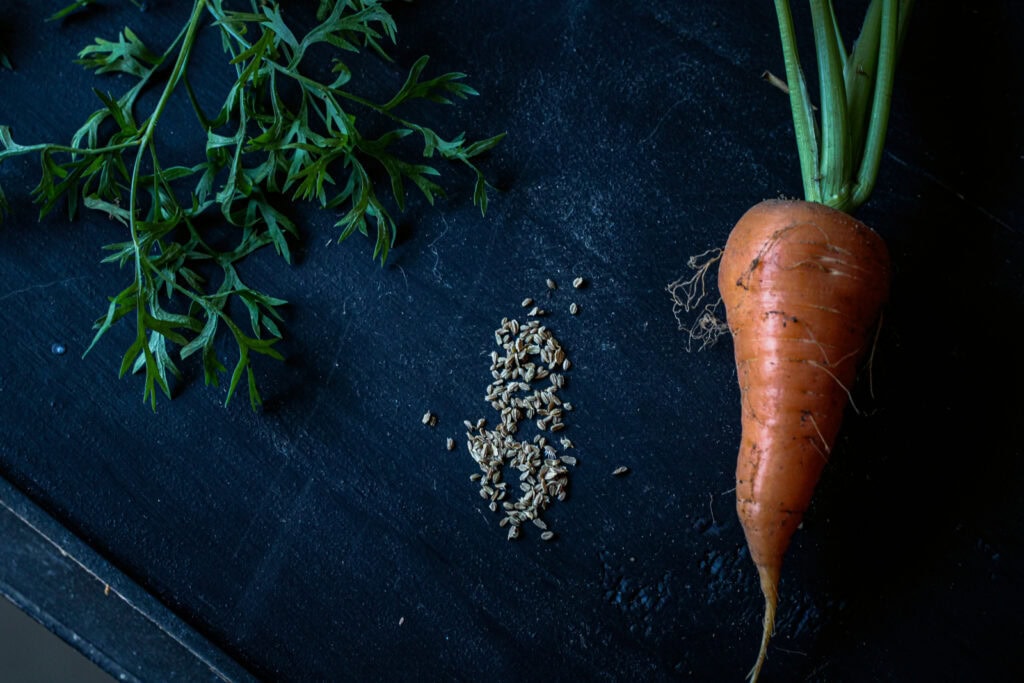
Carrot seeds are the smallest seeds ever. Okay, maybe I am being a bit dramatic, but they are so small that you can have a tough time planting them a decent distance apart.
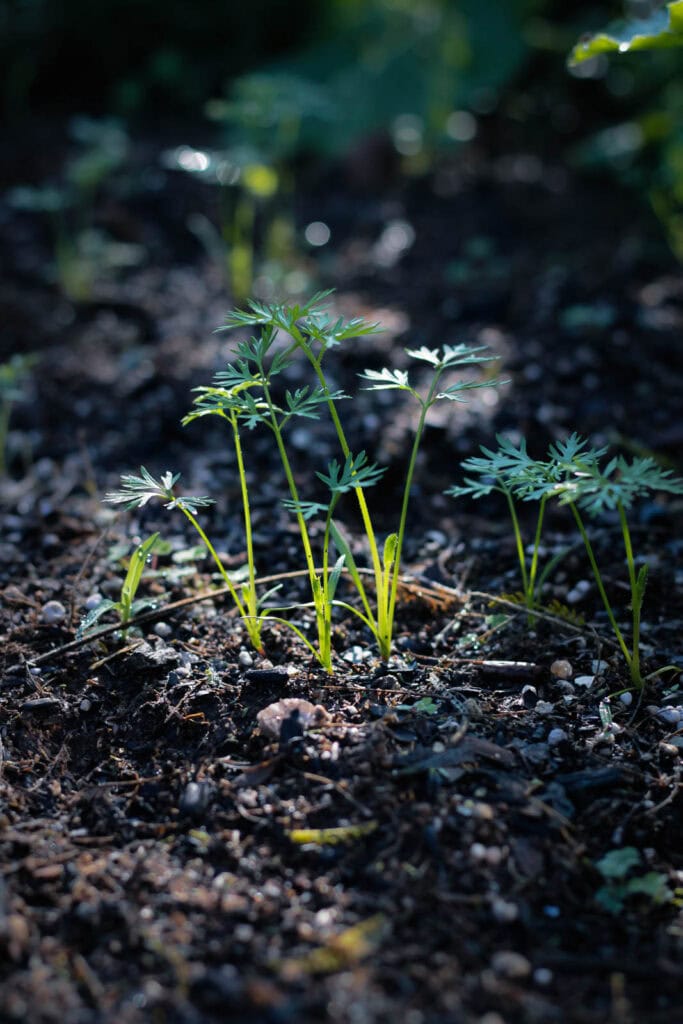
The ideal way to sow is directly in the ground, about 1 cm deep and 2 cm apart. You will want to keep the area moist but not flooded. Carrots tend to germinate better if they are not planted too deep. You should see the tiniest, long leaves in about 10 to 20 days.
You can cover the seeds, with grass cuttings or even a plant, to let them germinate without being rained into the ground, but I have not found that necessary.
I have not tried sowing in trays. Usually, that is a practice used in countries with short growing seasons, and we certainly don’t have those. If you want to sow in a tray, you can give it a try, just keep in mind that these are root veg and so they won’t be happy to have their root moved. In a tray, sow them just below the surface and in a large seed container (not a plug tray) that will allow you to remove the root with a big chunk of soil. This way you won’t disrupt the root.
I sowed my carrot seeds in March, just as the weather was starting to cool off and within a few days the tiniest of leaves sprouted. I had tried to make neat little lines in the soil and to plant individual seeds in individual holes, but with the size of the seeds, I gave up and just sowed freely. This meant I had some carrots growing far too close together, and while I left mine to be baby carrots, you can thin them out to give your carrots more space to grow to their full potential.
By August, I pulled them all up, a huge and delicious harvest, and then planted more.
The goal with growing your carrots is to do everything you can to make sure that the carrot will grow straight. This means your soil should be well worked and not compacted.
Carrots will grow through summer in the Lowveld, but make sure that if you plant in summer you loosen the soil enough. If you don’t do this, the rain and heat will compact the soil and you will get stubby little carrots instead of those long ones you see on the seed packet. In winter, you will have the opposite problem. If you let the ground dry out too much, the soil will also compact, resulting in some strange looking carrots.
Growing
It can take a while for your carrots to reach a decent size for harvesting. But once they have sprouted, so long as they get enough sunlight, are kept well-watered (once a week in winter and more when the days are hot in summer), and are given some plant food once a month, they can be left to just do their thing.
Because these are root veg, make sure that you keep them well weeded. And when weeding, go carefully, especially when your seedlings are small, or you might pull up a carrot.
Harvesting
The best way to know when to harvest your carrots is to put your finger in the ground, close to the top of the carrot and try to gently feel how big the carrot is. Sometimes you might even be able to see the carrot top sticking out of the ground and if it is around 2-5cm in diameter and if it has a large plume of long leaves, you can pull one. There is no safe indictor to let you know if the carrot is going to be long or short, and if you pull one that you are not quite happy with, there’s no going back, it can’t be replanted.
To avoid tiny sad carrots, make sure that you give them loose soil and enough space to grow happily.
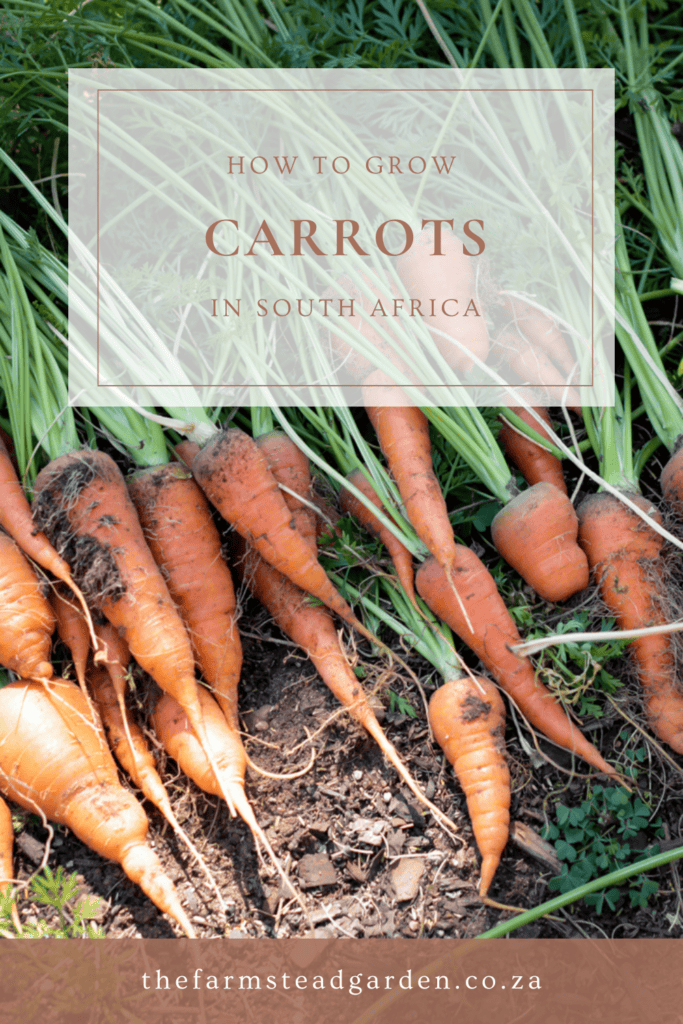
When harvesting carrots it’s going to be a humorous occasion because they can come out in really strange shapes, and some can be quite underwhelming in size. But that is natural, that is nature. What we see in the shops is the perfect carrot, and sadly that means we often don’t realise just how strange looking vegetables can actually look.
If the carrots are firmly in compacted ground, pull gently or you might end up breaking the leaves off and when that happens you will have to dig your carrot out.
Carrots can be left in the ground for quite a long time. You don’t have to harvest them all at once. Instead, use your garden like a grocery shop and pull when you need them.

Pests
Here in the Lowveld I have not encountered a carrot pest yet, but too much heat and rain can do a number on your carrots which is why I like to grow in autumn, winter and spring. Just because I have had good fortune with my carrots doesn’t mean there aren’t pests. In South Africa nematodes, cutworms, and millipedes can cause damage to the root, while blight and mould can damage the entire plant.
Keep an eye out for drooping leaves and split roots, and remember you are more likely to have to deal with issues in the hot and humid summer months.
Make sure that you store your seeds in an air tight container in a dark, cool place. I have had the misfortune of having weevils find my seeds and lay their eggs in them.
What to do with your harvest
- Preserve your carrots by grating or chopping them up, blanching them and then flash freezing them before storing them in your deep freeze.
- Can them. Try out curried carrots or simply can them in a simple, plain brine.
- Add them to stew. Chicken or beef stews are perfect for carrots.
- Carrot cake. So easy to make and perfect for some indulgence. Go on, treat yourself.
- Snack on them. Garden carrots are divine fresh!
Get your carrot seeds from a local nursery or online from Seeds for Africa or Glen Seeds. If you want variety, Seeds for Africa never disappoints.

Growing Carrots in South Africa Q&A
- What is the best time to plant carrots in South Africa?
Carrots can be planted almost year-round in South Africa, but the best times are during the cooler months, from February to April and July to September. You should avoid planting carrots in the extreme heat if you want optimal growth. - How long does it take to grow carrots in South Africa?
Carrots generally take 70–90 days to mature, depending on the variety and growing conditions. - What type of soil is best for carrots?
Carrots do best in loose, sandy loam soil that is free of stones and debris. The soil should be well-drained, rich in organic matter, and have a pH between 6.0 and 6.8 (but don’t worry too much about the pH). - How much water do carrots need?
Carrots need consistent watering, with about 25–30 mm of water per week, but don’t overwater, as waterlogged soil can cause root rot. - Can carrots be grown in containers?
Yes, carrots can be grown in containers but you will need your container to have a depth of at least 30 cm to accommodate the carrot roots. Use loose, fertile soil and ensure the container has proper drainage. - How do I prevent carrots from splitting?
Carrots split when there is inconsistent watering or when they grow in compacted soil. To stop this from happening you should regular water and prepare the soil to be loose and deep. - What pests and diseases commonly affect carrots in South Africa?
Common pests include carrot fly, aphids, and nematodes, while diseases like leaf blight and powdery mildew can occur. Rotate crops and use organic pest control methods to manage these issues. - Can carrots be grown organically in South Africa?
Yes, carrots can be grown organically by using composted manure for fertilization and natural pest control solutions like neem oil or garlic sprays. - What are the signs that carrots are ready for harvest?
Carrots are ready for harvest when their shoulders (tops) are visible above the soil, and they have reached the expected size. The tops usually appear vibrant green and healthy. - How deep should carrot seeds be planted?
Plant carrot seeds at a depth of 1–2 cm and cover them lightly with soil. Ensure good seed-to-soil contact for proper germination. - What fertilizer is best for carrots?
Use a low-nitrogen, high-phosphorus fertilizer, as nitrogen promotes foliage growth at the expense of the roots. Compost or bone meal are great organic options. - How can I improve carrot germination rates?
Carrot seeds are slow to germinate, often taking 2–3 weeks. To improve germination:
- Keep the soil consistently moist.
- Cover rows with a plank or cloth to retain moisture until germination.
- Soak seeds in water for 24 hours before planting.
- How do I store harvested carrots?
Carrots can be stored in a cool, dark, and humid place for several weeks. For longer storage, leave a few centimetres of the stem attached and avoid washing until just before use. - What are the best carrot varieties for South Africa?
Popular varieties include Nantes, Chantenay, and Imperator, which perform well in South Africa’s diverse climates. - Can I plant carrots with other crops?
Yes, carrots grow well with onions, leeks, and garlic, which can repel pests. Avoid planting with crops like dill and parsley, as they may attract similar pests. - How do I deal with stunted carrot growth?
Stunted carrots are often due to poor soil preparation, overcrowding, or insufficient sunlight. Thin seedlings to 2–5 cm apart and ensure at least 6 hours of sunlight daily.





can you plant carrots in clay soil mixed with compost at all as when you do compost hos lost must yoh wait before you mixed it in with the clay soil before planting then
Hi Dan, you don’t have to wait to plant. I have clay soil too. I mixed compost as well as sandy top soil into my clay soil to loosen the clay. I planted seed the next day and had a fairly good harvest.