
 Leigh-Anne Harber
Starting a vegetable garden can feel like a dizzying experience.
The moment you start researching all the different gardening styles, layouts, and seeds, you could start wondering if this is something you make a success of.
But the process of creating your first food garden in South Africa is not something that you should overthink or be intimidated by, and it is also not a process that you should compare with others heading down a path similar to yours.
With just 10 simple, easy-to-follow steps, you can harvest the most delicious fresh tomatoes for a salad or herbs for your pot of bunny chow in just a few months.

Why I Believe Everyone Should Start with a Potager Veggie Garden
Spend any amount of time on social media and you will be inundated with gorgeous photos of raised beds and stylised gardens that are the result of years of hard work rather than something that has been quickly thrown together.
While these gardens certainly have their perks, and while they can be a lot easier to create, especially if you have the space and the money, I personally feel that every new gardener should start with a potager patch.
The term potager basically translates to kitchen garden and it is an unfussed gardening method that anyone can throw together with minimal effort, and it looks good. There is a permanency to raised bed gardens and there is always a small risk that you might only enjoy gardening for a season and then lose all interest, in which case your raised bed garden would have depleted your funds, taken up your space, and would now need to be demolished.
The concept of the potager, as I understand it, is to choose a spot that has enough sunlight, chuck a bag or two of compost into it, decide what you want to plant, and then using the principles of companion planting, get to it.
Compact in-ground planting can minimise weeds and maximise your space, and should you decide growing veg is not for you, you can plonk an agapanthus plant or two in the space, and no one would be the wiser as to what you were doing.
And as I have said before, somewhere, having a space where your carrots cosy up to wild garlic, and where the broccoli mingles with the proteas, is just downright gorgeous. Mono-planting is boring and it is when things are boring that people start to lose their interest.
Steps to Creating Your First Garden to Grow Vegetables at Home
The rules are that there are no rules.
This is your garden, this is your dream, and so the space should be a perfect example of your style.
To be your virtual Sherpa on this new and let me warn you, addictive, journey, I am going to share with you the steps I would find helpful, knowing what I now know.
Step 1: Daydream About Your Garden
Before you grab a spade and hoe, you need to slow down and do some dreaming. You probably already have an idea in your mind about how you want the garden to look, and while you will probably change your mind a few times, it helps to dream a little and have a kind of sort of plan.
The best method that I have found useful is to sketch it out. In my garden notebook I have a rough layout of the space I have and then I doodle. It helps to do it all in pencil, then you can erase and make changes. You can also hit Pinterest and both find and pin ideas for your garden. I do this too.
Step 2: Pick Your Spot
South Africans are spoiled with a near perfect climate, but that doesn’t mean you shouldn’t spend a month or two staring out the window, tracking the sun. Unless you generally pay attention to such things, it can take up to a year to fully appreciate the sunny and shady areas of your garden and this is where having a potager instead of a raised garden can come in so handy. Because you can move it easily if need be!
South Africa’s fascinating and varied climates mean your garden can thrive in various settings, such as:
- The Eastern part of the country which is warm and humid is great for year-round gardening.
- The Western Cape which is perfect for Mediterranean herbs like rosemary, and thyme, and winter veggies like spinach.
- And arid regions like the Karoo where the focus is on drought-tolerant crops like carrots and indigenous plants.
When deciding on a spot, choose one with at least six hours of sunlight. And no matter where you live, I highly recommend installing a greywater system or rainwater tanks to keep your garden hydrated. Rainwater tanks are fairly affordable and you can always keep an eye on the auction house for a bargain!

Step 3: Prep the Soil
To dig or not to dig, that is the question. If you are new to gardening and you get to this step, chances are good that you have stumbled upon the no dig method, which is an amazing method to use but it’s not for everyone.
Healthy soil equals happy plants. But making the soil healthy can require some work, depending on the soil you are dealing with. And sometimes, depending on the soil you have, you might need to dig it deeply at least once, before you can try the no dig method.
But as a new gardener with a new garden, you really just need to get started with the basics.
South African soil varies widely, so start by having a look at the soil’s structure and perhaps running a pH test (I have not found this necessary, to be honest, but sure, why not). When prepping any soil always add organic compost to make your soil rich and full of the good stuff. In time you will want to create your own compost bin, because you can never have too much compost.
For sandy or clay-heavy soils, mix in lots of compost or well-rotted manure to improve structure.
Step 4: Choose Your Crops Wisely
The best advice I have heard is to grow what you will eat. I ignored this advice because I was addicted to trying to grow every kind of seed, but eventually, I started following this advice because I wanted abundance as opposed to growing one of everything.
Depending on the season you are growing your first garden in, here’s what I would grow as a beginner:
- Summer – Tomatoes, peppers, cucumber (spring and early summer), and basil.
- Winter – Swiss Chard and spinach, peas, carrots and broccoli.
You can combine these with flowers like nasturtiums or marigolds (in summer) or sweet alyssum and pansies (in winter) to create that classic potager look.
Step 5: Gather Your Seeds or Seedlings
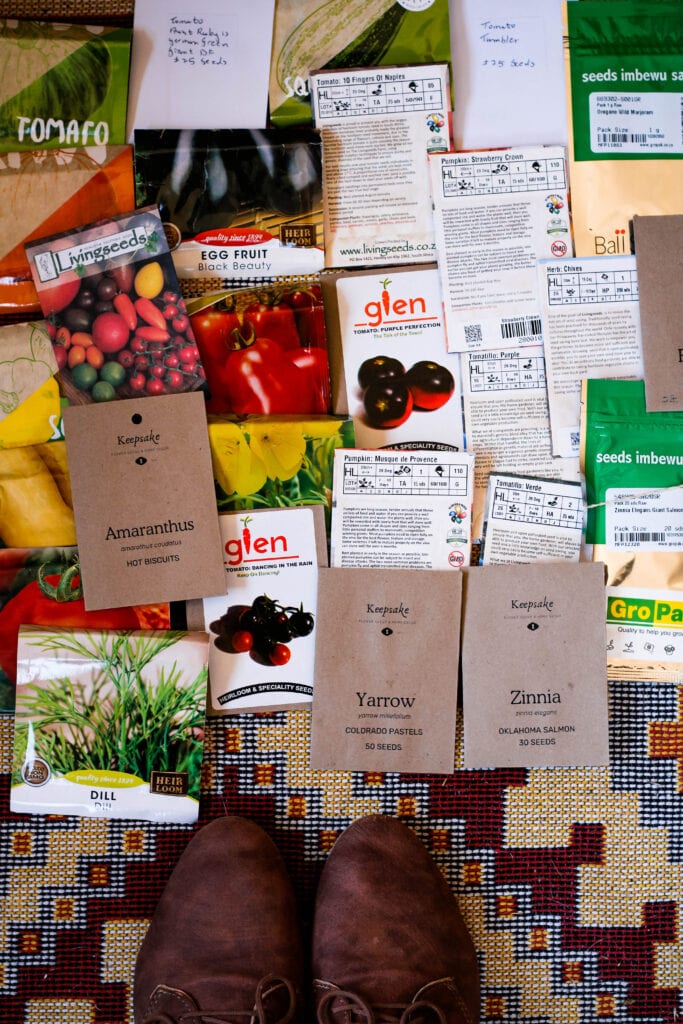
You have two options when growing your vegetable garden; seed start or buy some seedlings.
Some seeds, like tomatoes and cucumbers, are easy to grow while others can be difficult. Start with something easy and something you enjoy eating. This way, you will have more success than failure and as such you are more likely to stay motivated.
I buy some seeds from nurseries and I am particularly fond of RAW Living Seeds and Kirchhoffs. These brands are affordable, they are very generous with their seed quantities and they have excellent germination rates.
I also support a few South African suppliers like Seeds for Africa, Livingseeds and Glen Seeds. Each has online shops stocking huge selections of heirloom varieties and their prices are unbeatable.
Step 6: Plan Your Layout
You have your dream plan, you have your soil that’s prepped and you have the crops ready to grow (whether you have bought them or started them from seed), now you need to put your layout into action.
You should arrange your plants for both aesthetics and companionship. For example, basil loves tomatoes and helps repel pests and carrots thrive alongside onions, which deter carrot flies.
Try to avoid creating a monoculture garden. Single rows of veg might seem like a good idea to some, but you can end up wasting space. Don’t be afraid to interplant and see what works (just consult a companion planting guide before you do so).

Step 7: Start Planting!
It’s the moment you’ve been waiting for! You should now be in a position to plant your seedlings. In warmer areas, you can stagger your planting every few weeks so that you have continuous harvests. And don’t be shy to talk to your plants—it’s been scientifically proven to boost growth!
Step 8: Water and Mulch Like a Pro
I am a sucker for mulch. I have found that when I direct plant beneath a mulch of leaves or straw, I almost always have great success. Mulching keeps the soil warm in winter and it helps keep things cool in summer, and it helps with keeping the moisture locked in. Mulch can enrich the soil and it acts as a weed suppressant, minimising the amount of work you need to do in the garden.
Watering efficiently is also so important, especially here in South Africa, where water can be so scarce. You should try to water early in the morning or late in the afternoon to reduce evaporation.

Step 9: Keep Your Garden Healthy
The goal when it comes to garden health is to try to be as natural as possible with your approach. Don’t use harsh chemicals if you have a natural alternative and always try to make the most of companion planting.
Every 6 months, or so, you should add some fertilizer to your garden beds, and you can also add fresh layers of compost to your garden each season. I like to use Guanoboost or some or other liquid plant food every few weeks.
Step 10: Harvest and Enjoy
The best thing about veggie gardening is that you are literally rewarded for your hard work.
When your crops are ready, you should harvest them at their peak so that you can enjoy the full flavour. Tomatoes should be harvested during the heat of the day, as this is when they are at their most tasty while things like lettuce and cucumbers should be picked in the early morning or late evening.

Start a Garden Journal
A garden journal is something that will become your personal green thumb guide.
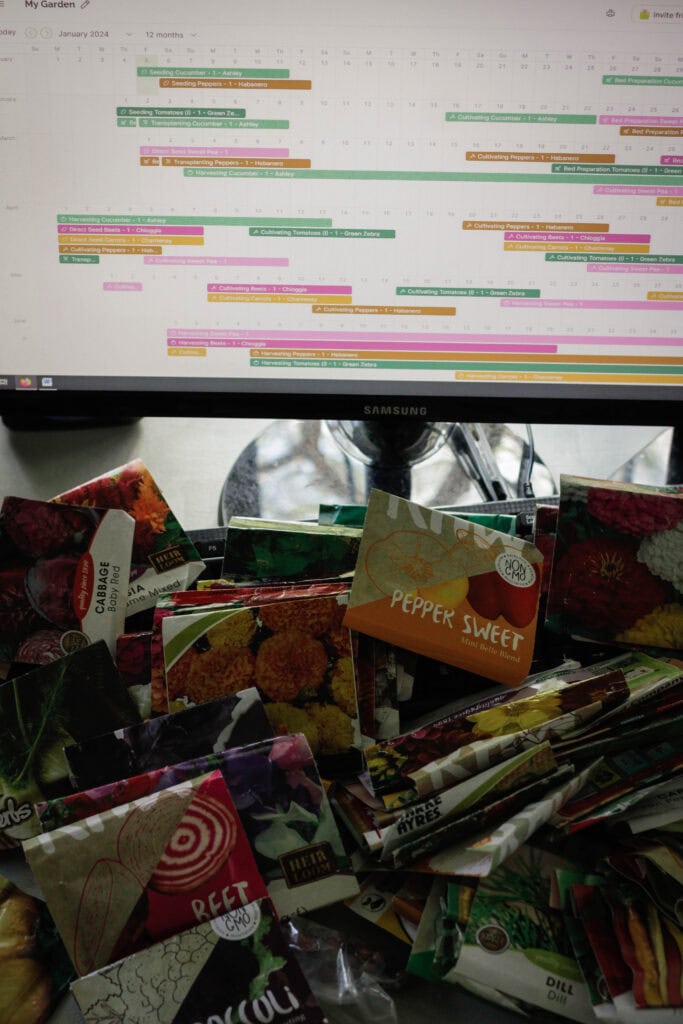
You should try to record what you planted, where, and when and you should track your successes, and challenges, and even add sketches or pressed flowers. Over time, your journal will become a treasure that will help you refine your garden year after year.
Gardening is about the journey and the destination.
And you’ll want to celebrate each sprout, savour the full flavour of every tomato, and just enjoy the beautiful mess of it all.
In a world where we tend to want to control what is going on around us, gardening shows us that even when we have very little control, the result can be something absolutely beautiful!