
 Leigh-Anne Harber
Table of Contents
ToggleOf all the herbs one could possibly grow, Dill is my favourite.
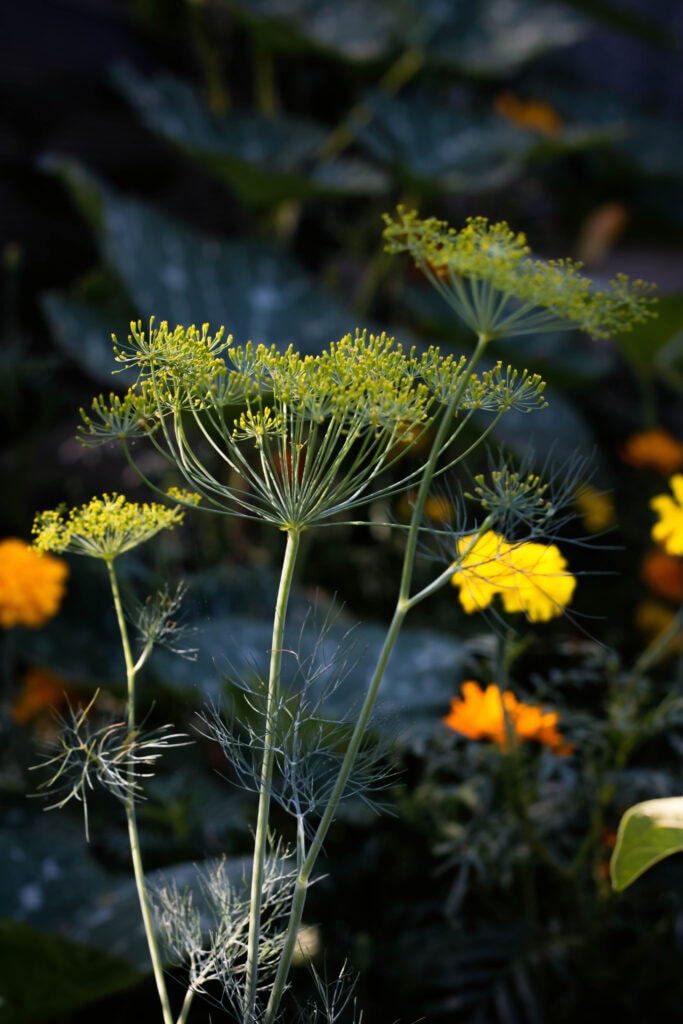
It tastes great, it’s easy to grow from seed, and it makes the most beautiful plant, with the most beautiful flowers. I will usually have a whole bed full of it, and aside from taking a few leaves every now and then, which I add to all sorts of things, from my white pizza sauce to my potato salad, I just enjoy watching this plant grow.
Dill was not an herb familiar to my palate until I decided to grow it for the first time (I didn’t even have the slightest idea what it would taste like). I initially grew dill just because it looked so pretty, and today, it is an herb that my garden is never without.
The plant is native to North Africa, the Arabian Peninsula and Iran, but it grows easily and abundantly in the Lowveld, through the hot summers, if given some shade, and throughout the winter, if given enough sun. It can be used medicinally but it is generally considered a culinary herb.
If you are looking for something fragrant, delicious and simply lovely to look at, dill might be just the choice for you. The leaves have an indescribable, but pleasant taste, and the plant can be added to a potager garden, or it can be grown in clumps in your vegetable patch or herb garden, without the worry about it taking over or being incompatible with your other veg.
Types of Dill
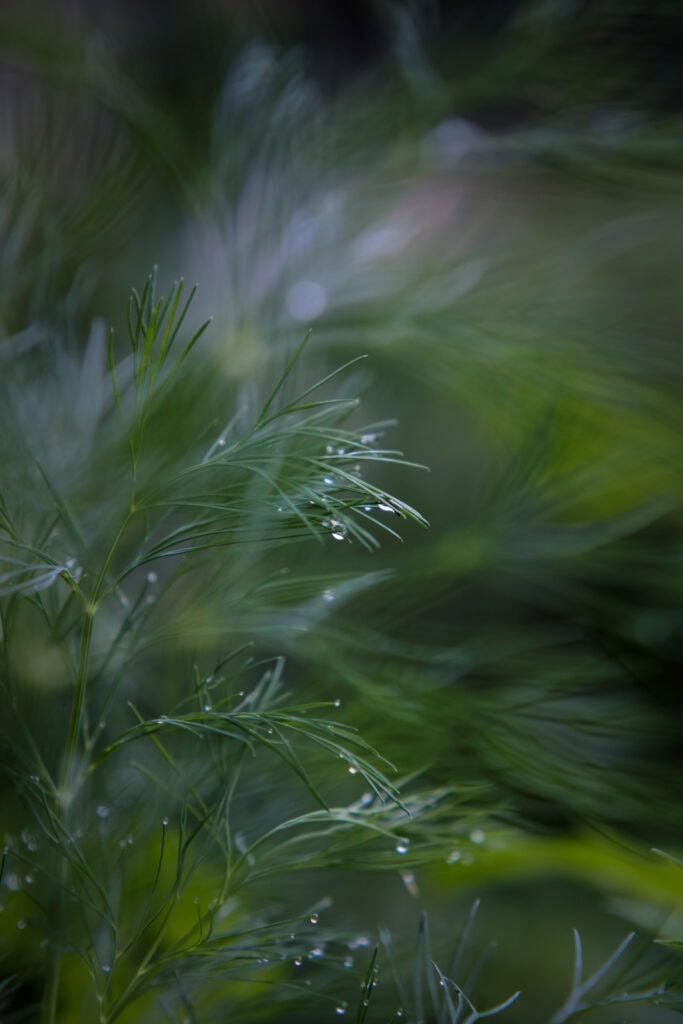
Dill comes from the same family as coriander, anise, celery, caraway, angelica and fennel, and it makes sense that they are all related as they pretty much all look the same.
Dill comes in only a few varieties, and the only real difference between the varieties has to do with how it looks and how it grows as opposed to how it tastes. What I am trying to say is all dill mostly tastes the same, so you don’t have to worry about buying a variety whose taste you don’t appreciate.
The most commonly homegrown dill varieties include bouquet dill, mammoth dill, superdukat dill, hera dill, and vierling dill.
In South Africa, mammoth dill and bouquet dill are among the most commonly bought varieties. Both of these varieties grow into huge plants! This not only makes them incredibly productive plants (believe me, you’ll be giving it away once the plants take off!) but it also makes them an affordable garden plant, if you are looking to quickly fill out a space.
You can also use your dill in flower arrangements, something I regularly do.
Dill is generally grown as an annual.
Here in the Lowveld, it tends to live a little bit longer than an annual plant, provided you cut the flowers off, but it does often get mildew, so don’t expect it to perennialise. The good news is that the seeds can be used in cooking so don’t be too worried if your plant comes to an end.
Sowing
I generally start my dill seeds in a seed tray, but I have also had success growing the seeds directly in the ground. If you leave your plant to go to seed, you will without a doubt have some new plants as a result, and within a very short space of time.
In the Lowveld, I have grown dill from seed all year round, although I have certainly had a lot more to harvest when growing them in spring, summer, and autumn, when the weather is still quite warm.
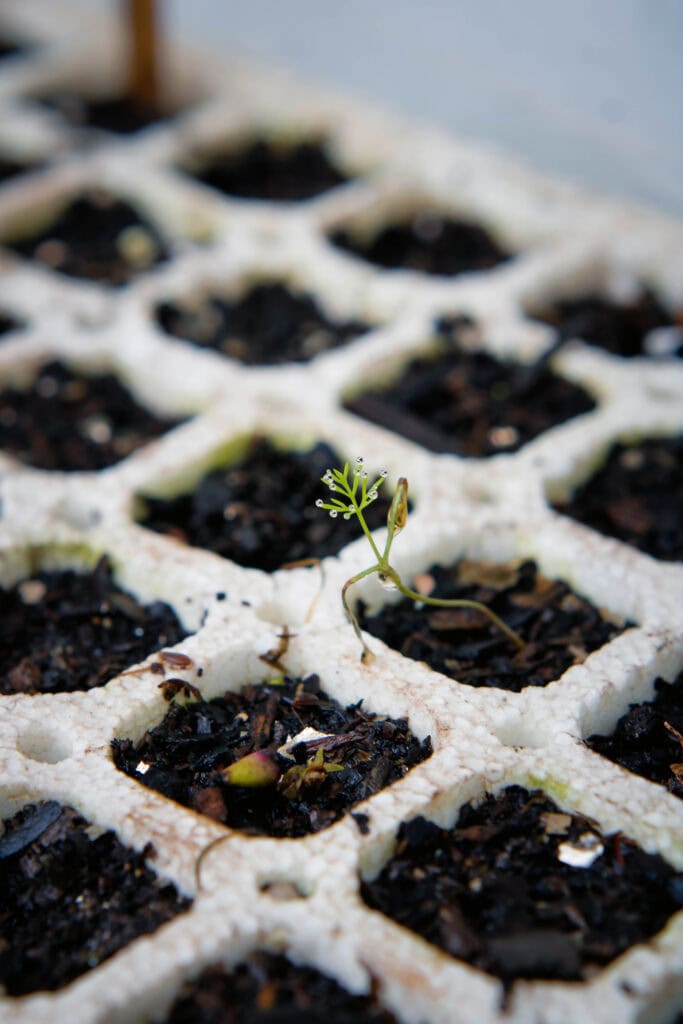
Dill seeds are rather small but not so small that you can’t easily handle them. The seeds are flat and oval. To plant them, grab your seed tray and your favourite germination mix, make a shallow indentation, plant and cover.
In around 2 weeks, you should have the finest of green shoots, and about a week after that, the seedling should get its first real leaf, which looks similar to an asparagus fern.
If you are direct planting, or letting the plant self-seed, you should see the same results in about the same amount of time. The greatest challenge you will have to deal with when planting in the ground is to keep the area moist as the seedlings germinate.
Dill seedlings are rather delicate and if you leave them to dry out, they will die (I learned this the painful way).
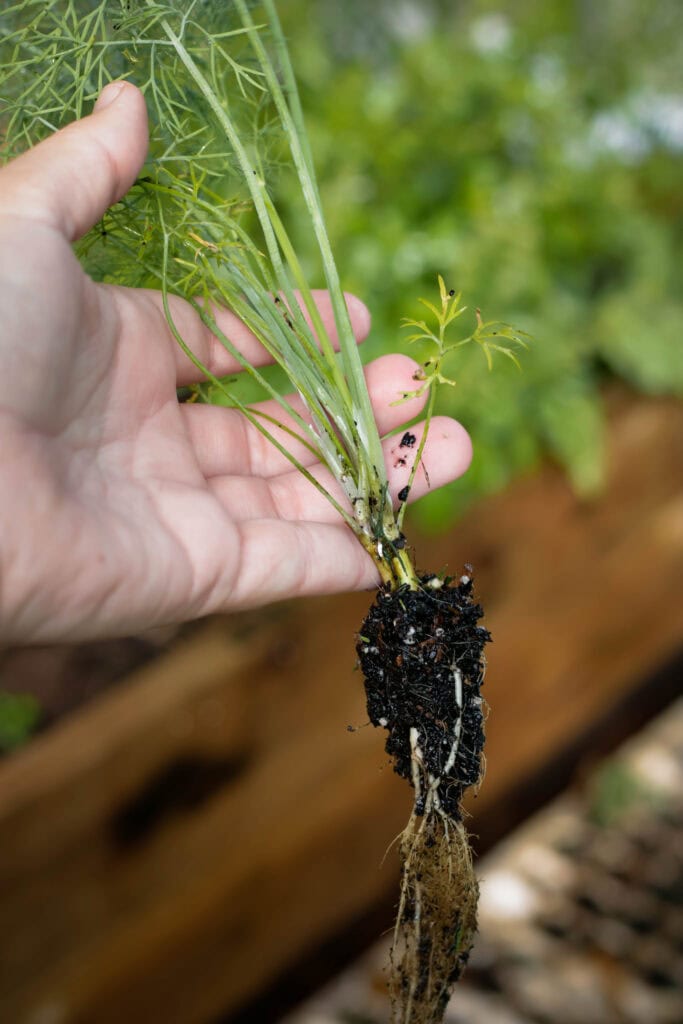
You can leave the dill seedlings in their trays for about 6 weeks, and once the main stem is straight and strong, it can be safely planted out.
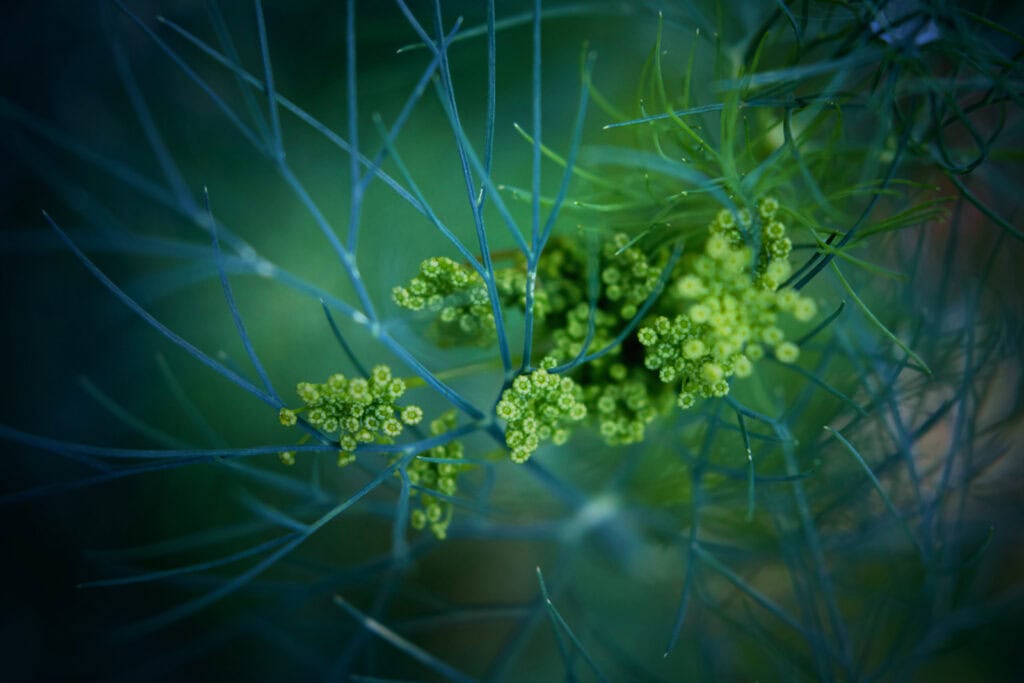
Growing
Dill grows best when grown in an area of the garden that is shaded from the intense heat of the afternoon sun. These herbs tend to grow upright, rather than bush out, which means you can space them quite closely together.
Dill is perfect for a smaller space as well as for a container garden, and it will blend in beautifully if you are creating a proper, intermingled potager-type space (or as Jane would call it, “a jungle garden”).
As for care, you can treat dill as you would other herbs. It needs a good amount of watering, and during hot spells with no rain, I would recommend watering daily. You will be able to see if the plant needs water by the condition of its leaves. When the plant is dry and struggling, its leaves and eventually its flowers will droop sadly. The drooping also tends to occur on extra hot days, always check your soil before you water.
Dill can be affected by some pests, such as aphids, spider mites, snails, and slugs. These plants can also be affected by grasshoppers and thrips. To prevent damage, once you notice that you might have a nasty little infestation going on, you should treat the problem as you would on another plant. Dill can also be quite cold-sensitive, so keep the seedlings and new plants in a warmish spot until they have properly established.
And dill tends to get mildew. There’s not a lot you can do about this during the intensely rainy months, but during dry spells, you can always avoid the mildew by watering the base of the plant, in the early morning.
Harvesting
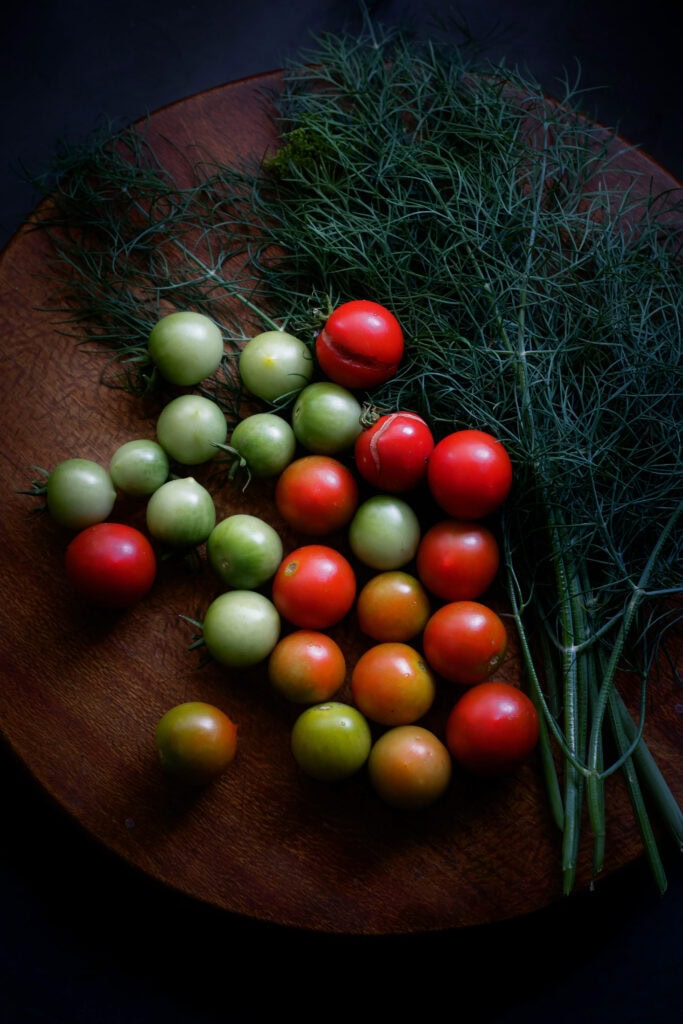
The great thing about dill is that you can harvest the whole plant. The leaves are fragrant and can be taken from very young plants, although it is best to only start harvesting once the plant is around 20cm tall and has a few sets of leaves.
Leaves should be harvested from the bottom up, taking the oldest first. This prevents the plant from looking stripped and it also ensures that you use up the oldest stuff first. If you don’t pick the bottom leaves, as they get old they can lose their flavour and, in my experience, they also tend to get mildew, especially here in our area where the summers are rainy.
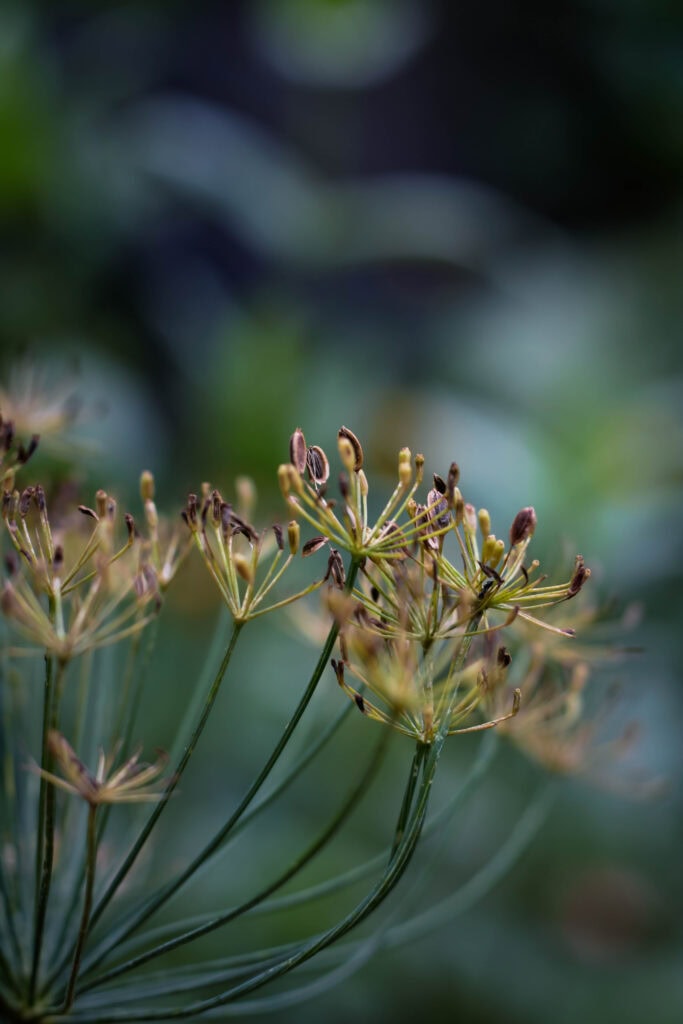
Once the plant starts to flower, all of its energy goes towards making seed. You can pick the flower and use it in your cooking, in your preservation or in a bouquet, or you can leave the flower to make seeds.
You can harvest the seed and store it in a bottle, to use in the kitchen or to plant again.
What to do with your Harvest
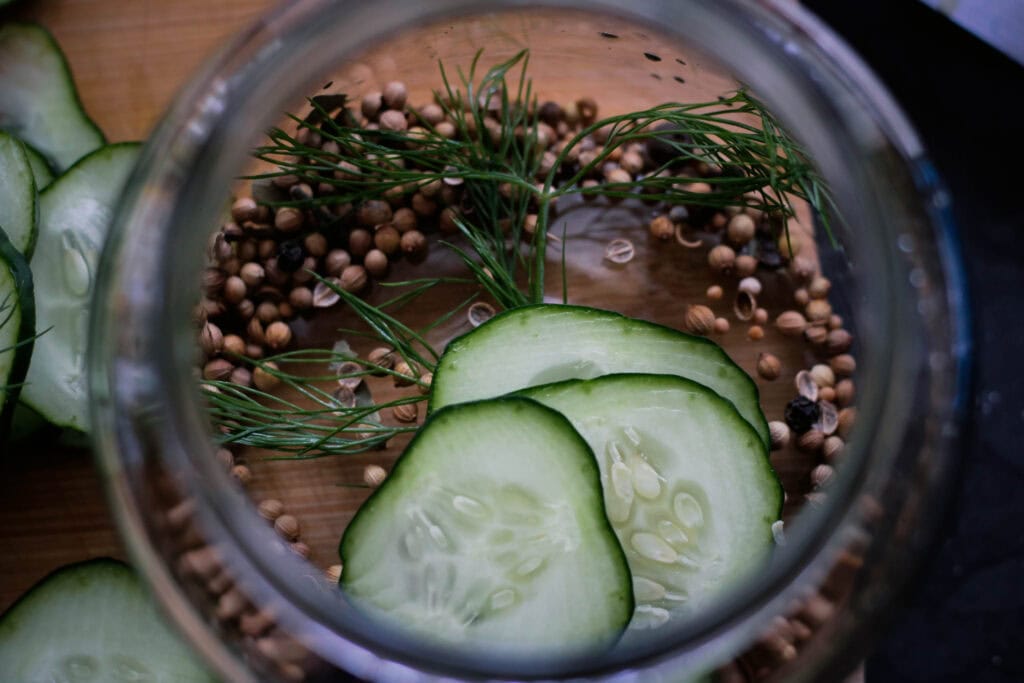
- Pickles! My favourite thing to do with dill is to use it in my cucumber pickles.
- I also chop it up finely and use it in my potato salad.
- Dill mixed with mayo, salt, pepper and some garlic, makes a wonderful pizza or wrap sauce, pairing well with chicken and mushrooms.
Where to Buy Dill Seed in South Africa
- General Suppliers
Kirchhoff Seeds – https://www.kirchhoffs.co.za/our-range/herbs/dill/dill/
- Specialist Suppliers (for more variety and better prices)
Living Seeds – https://www.livingseeds.co.za/herb-seed/dill-bouquet.html
Seeds for Africa – https://www.seedsforafrica.co.za/collections/herb-seeds/Dill

My mouth is watering!
💚 I’ll bring you some when my plants are ready to harvest